Monday, March 21, 2011


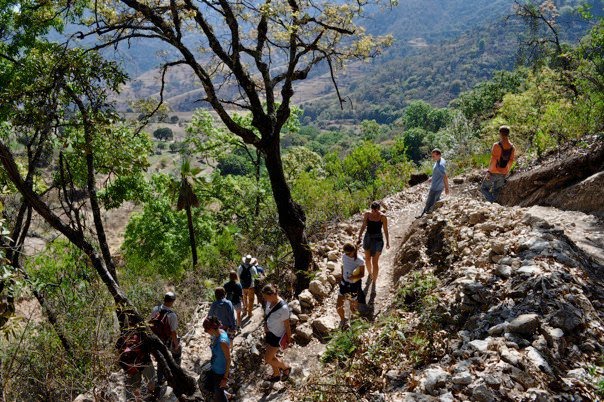
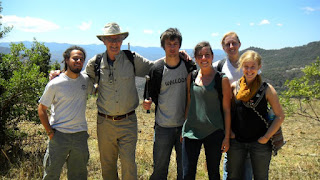
For the past couple of weeks, we have been working within our separate tracks. The Spanish track stayed in the city and continued to take classes at the University of Benito Juarez, and we, the Geology and Music track, went to Capulalpam, a small village nestled high in Oaxaca's Sierra Norte Mountain Range. In Capulalpam, we set out to analyze the effects of the gold mine in the neighboring village of La Natividad on the local water supply. We arrived in Capulalpam in the middle of the day on Wednesday, after a winding two-hour bus ride through the mountains. Upon arrival, we met with Francisco, a town official, who gave us an overview of the towns usos y costumbres governing system as well as a history of the town's struggle with mining companies. After the meeting, we went to our homestays to meet our new temporary families. The girls, Tessa, Erin, Anna, and Mary Lucia, went to a house up the hill from the village centers and the guys, Isaac, Max, Barry, and Antonio, our translator for the trip, went to a house downhill from the village center. At our houses, we ate comida and took siestas. At five o'clock, we regrouped in the town square and got a ride in a Capulalpam police truck down to the village of Natividad, where we planned to take samples on the property of the former gold mine, which has been inactive in recent years due to resistance from Capulalpam. Francisco and another Capulalpam town official led us there to collect samples that Professor Doolan would test for contamination. Francisco, our guide from Capulalpam, talked with a Natividad resident (people from this village are in favor of mining, because they need the jobs) and was told that we were not allowed to go onto the mine's property. We continued on, following our guides lead, hiking down a steep dirt path to the river. At the river, which had a reddish tint, we collected a water sample, and then continued our search for waste deposits. Our guide chose not to backtrack through Natividad so Fransisco took us back on a guided hike through the beautiful mountains of the Sierra Norte. We watched a stunning sunset and then continued on by the light of the moon. When we finally got back to our homestays we were tired and hungry so we settled in for the night.


We spent the next morning hiking up to a dam at the head of the "arroyo Y" to collect water samples at various springs and the dam. As we hiked along Barry occasionally stopped to offer his insight on the local petrology. Lucky for us we had special geological hammers allowing us to get a great look at all the layers of the rocks. We had a picnic by the river before going home to eat comida and rest. That afternoon we analyzed the samples for PH and conductivity in ppm. We compared our notes and presented our findings to the town authorities. They were shocked to hear that there were plans to reopen the mine and grateful to receive the news. We resolved to stay in contact and work together to make sure that their community wont be exploited by the large companies.
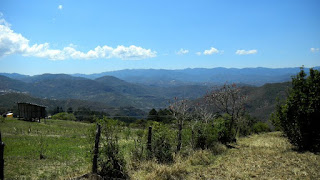


We left the next morning after a large breakfast with the town authorities. It was great to get back to the city and reunite with our friends but we miss the fresh mountain air. On Saturday night we all got together for a delicious pasta dinner prepared by Cynthia topped off with a goodbye cake for John, the farming professor, who returned to Vermont on Sunday. Some of us finished our weekend with a trip to opening day of Los Guerreros de Oaxaca baseball club.


An update from the Spanish track! This weekend we went to Yagul, an archeological site, with Maestra Judith Garcia, our Spanish professor at the University of Benito Juarez (UABJO). We discovered the Judith is also an agronomist with a passion for ethnobotany.
Danielle standing at the pinnacle where the winds from the coast collide with the inland winds creating a place of special energy.
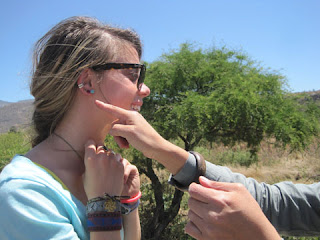
Maestra Judith places flower earrings on Rachel's ears - a plant names "aretitos" or little earrings.
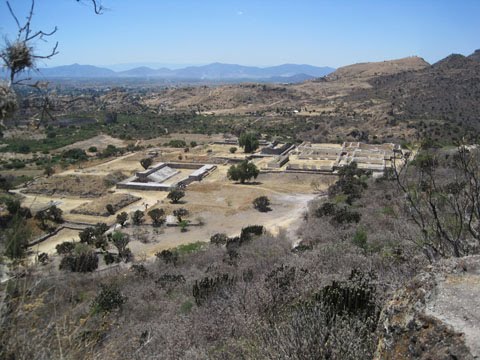
The archeological site Yagul. The inner rooms of the palace are part of a labyrinth designed to protect the residents from attack.

Mike bathing in the baño de princesa at the pinnacle of Yagul, providing a 360 view of the Oaxaca valley.


One more week of geology class before moving on to music!
MAX, TESSA and ISAAC

Sunday, March 13, 2011

On the road again: Apoala


Tucked away in a valley far, far away... there exists a place bursting with lush, native vegetation surrounded by vertical, succulent-covered, limestone cliffs. For some, it is a place sought out by those with the desire to enter a place lost in geologic time. For others, it is place for those with the desire to study all that the pre-Hispanic agricultural system has to offer. But where is this place do you ask? How can such a perfect oasis exist right here in the desert like valleys of Oaxaca? Well, now you can ask the experts – thats us!


For the past week, while those in the Spanish track returned to the city to start their courses at the University of Benito Juarez, both the geology and food systems tracks packed their bags, once again, for another adventure. Traveling nearly three and half hours though a series of scenic (yet bumpy) roads to Apoala, in Oaxaca’s beautiful Mixteca region, we arrived jaw dropped. Apoala, known for its bountiful supply of water and Karst geology, we knew this week we were destined to have a very different experience.

The first two days we were fortunate enough to be shown around waterfalls and limestone riverbeds by our new, storytelling tour guide, Felix. But the next few days would be up to us. Choosing a project based upon our observations, we set off into the community gathering information from everyone willing to offer.

But working minds crave big comidas. Sampling the local grub in this part of Oaxaca however, consisted of exotic dishes such as cactus flower in a spicy chick pea sauce, mole amarillo and watercress, every kind of atole (even wheat!) under the Oaxacan sun, and endless amounts of fresh tortillas and beans. And what would early mornings be without café de olla and a variety of different styles of huevos a la Mexicaña, or even some with agave flower buds? Better yet, dinners of chocolate and pan dulce?!

Ok ok ok, we didn’t JUST eat while we were in Apoala. Oh no. We did much more than that. After daily group meetings, we each became independent researchers, choosing to investigate such topics as average water discharge both in a out of the valley, soils and crop rotation, local food economy, irrigation systems, and land tenure.

On our own, and invested in putting pieces of the puzzle of Apoala together each day, it was nice to finally get a chance on the last morning, to share our findings with one another before heading back to the city. The geology track, with river calculations, maps, and field journals in hand, explained to us the unique features of the land that lends itself the water distribution at both the beginning and end of the river. Learning to be ‘systems thinkers’, the food systems track compiled all their newly discovered knowledge into a concept map -- illustrating once again the interconnectedness of the human and agroecology present right here in Apoala.

After a long week of village research, evening basketball games, bonfires, cave exploring, waterfall swimming and eco-cabin living, we all piled back into the vans city bound.


Special thanks and warm welcome to our new staff...

food systems enthusiast, John Hayden, accompanied by Victor Izzo, our insightful TA

passionate geologist, Dr. Barry Doolan

and also to our lovely walking Spanish dictionary, Carolina Lukac -- we all had an amazing week!


Until next time,

Katie and Ariel

Sunday, March 6, 2011

Living it up in VIDA NUEVA


Teotitlán del Valle at sunset

This past week, Kristof, Isaac, Zoe, Erin B, Danielle, Heidi, and Rachel travelled to Teotitlán to stay with Vida Nueva. Vida Nueva is women’s cooperative to create economic and artistic opportunities for Zapotec Women. We each lived with a woman from the cooperative, taking part in daily activities. With a fairly open schedule, we received a true glimpse of daily life for these women and their families. Because we stayed in different homes, we each had extremely different experiences.


Rachel Levin:

Heidi and I stayed in the home of Zonieda and her extended family. Her family included Milca (a drooling five year old girl), Milca's parents, and Zonieda's father, Masunte, a 71 year old healer. This made for some crazy family dynamics with little to no silence. Their home was nestled at the bottom of Picachu, a sacred mountain that I had the opportunity to hike twice at sunrise! Zonieda works at the Teotitlán market, selling fresh fruit and vegetables every morning. It was extremely interesting living with a curandero (a traditional medicine healer) because his beliefs regarding health were tightly integrated into the family's way of life. I ate the best (and the most) food I have experienced while in Oaxaca. Isaac, Kristof, Heidi, and I had the opportunity to learn to make tamale amarillos which were delicious (we definitely did not impress them with our tamale making skills). On Thursday, we got to do a temazcal which is a ritualistic vapor bath. I was touched by the hospitality of all of the women of Vida Nueva.

Kristof emerging from the temezcal

Erin
I have discovered in my own life that certain “places” are special to families. Places such as where we were born, home, vacations we visit as families, or the common trips a family could have taken to grandma’s house. The dinner table is probably the most sacred place of any family. Here at the dinner table we grow up eating next to one another, learning and communicating about each other. The dinner table is the one “place” which doesn’t let us forget our origins and stays with us forever. I spent many afternoons and evenings sharing meals with the entire family of Silvia and Felix in Vida Nueva. We even had a birthday dinner for Eric, their son. I have relearned this week that throughout all our lives it is family that knows us best. Felix took time this past week to teach me how to make a tapete. Although, I only stayed with one specific family I learned what the family's functions were within the community of Vida Nueva. Felix was very proud of his life work with tapetes, he was also a very proud father of three boys.

Zoe:
An interesting experience that tested me in many ways. I lived with a family consisting of only 2 people, a daughter Teresa and her father. Upon arriving to their house I could imediatley see the differences between city living and village living. Village living is much more tranquil and connected to nature. The houses were much simpler and the floors all made from either concrete or dirt. The kitchen was outside under a small metal awning and the toilet was difficult to use for a tall east coaster, like myself. There were many plants in the courtyard that were flourishing and bright with color. I could feel living here was different that in the city as well. Each activity was completed slowly and there was a routine to the day where everything that needed to be done got done and if it did not, the mentality seemed- "there's always tomorrow."
For me village life was a bit to slow. I am used to fast pace living, always being consumed with activities and a to-do list that needs to get done today. With all my free time I fell back in love with reading and finished a book, "A hundred secret senses" by Amy Tan. (highly recommendable!!) and i realized I need to prioritize reading into my daily routine because it was so enjoyable and relaxing.
The last thing I have to comment on is the rugs they created. All of them done with such care and creativity. The patterns that can be created on the loom and the colors that can be made from natural materials were brilliant and I will never stop being impressed by the craftsmanship and dedication of the people.

Heidi Bergt:
Upon arriving in Teotitlan, I wasn't exactly sure what I expected from the week to come. What I came to realize over the course of the week was that anything I had expected was not the case. Overall, our time with the women of Vida Nueva was a very rewarding experience, but it was also very eye-opening in regard to what life in Mexico is really like. I enjoyed the opportunity to step out of our bubble in Oaxaca City and experience this culture firsthand. It was also a privilege to work with such incredible women in the weaving cooperative. Vida Nueva is comprised solely of single, widowed, or divorced women, and their community outreach and efforts to improve women's rights is amazing. Rachel and I stayed with Zenaida, a single woman who lived with her younger sister, her younger sister's husband and five-year-old daughter, and her 71-year-old father, Jasunte. Jasunte is a curandero, a traditional healer, and always had a story (or two, or six) to share at the dinner table. Although our week lacked any sort of formal schedule, it allowed us to truly capture the atmosphere of living in the village. The days meandered by with slow walks in the relentless sun to get pan dulce or a trip to the molino (mill) to grind corn for tortillas. We learned the art of making tamales, went hunting for guayavas to sell at Zenaida's stand in the market, and even had the immense privilege of taking a temazcal. Alas, Friday rolled around and it came time to bid farewell to our welcoming hosts. I was surprised at how sad I felt to be leaving these people I hardly knew, and we said our good byes with many promises to come back. Although I was quick to deem life in Teotitlan "simple", it was far from that. The complexity of the community fabric and the web of relationships, responsibilities, and customs would take far more than a week to even begin to comprehend. The village stay will be one of the most distinguished memories I think I will take away from Oaxaca.


Zimatlan, La Soledad, La Guadalupe & El Carmen


For the past week, we have been working with a NGO called Centéotl. Centéotl is a group that offers resources to communities so they can become more sustainable. They have been working to reforest and to create irrigation and potable water systems in the villages that surround Zimatlan, mainly through the construction of cisternas (water tanks) and presas (dams). Our task for the week was to interview and talk with the people of the villages of La Soledad, La Guadalupe and El Carmen about their experiences with water and Centéotl. Our home base was La Princesa Hotel in Zimatalan. The small city was more or less a home away from home for all of us.


What was truly unique about our group’s experience was that we got to spend time in these small villages and got a chance to compare their simple lifestyles. The villages were all extremely welcoming; each member greeted each one of us individually and told us how happy they were that we were there. Hearing how excited they were to meet us and share their experiences with us was inspirational. After interviewing the members of La Soledad on Monday, our guides from Centéotl gave us a tour of their community garden that was irrigated with a new cistern. That night we stayed in La Soledad and got to see first hand their way of living. The lifestyle is very simple, cooking on wood fueled stoves and using tortillas as their plate, utensils and food. All of the communities had a lot of pride in their food.


Upon our arrival to La Guadalupe, the second village we worked with, we all realized how happy the villagers were to have us there. After each person was introduced, everyone responded with a round of applause. We spent the day hearing stories about life in the village before and after they had cisternas and we talked with people about their ideas for the future. Everyone was incredibly educated about water conservation. After we finished discussing the water projects they made us lunch. We ate an amaranth and egg lunch. After lunch we returned to Zimatlan to process the information and stories we had just heard. It was strange to go between such small closed communities and Zimatlan. Though the villages were only about 15 minutes outside of the city the feeling between the two was dramatically different.


On Wednesday, we spent the entire day at the market in Zimatlan. All of the surrounding villages congregate every Wednesday to buy and sell everything from beans to batteries and pants to pastries. This is the only time during the week that many people venture from their pueblos. The market takes over the town center, with hundreds of vendors setting up shop for the day.


On Thursday we went to the third village, El Carmen. This village had the most developed water infrastructure, with many cisterns, three dams and a lot of irrigated land. We visited all three damns, one of which was under construction. They were all mainly constructed by the women of the village, since most of the men are working in the U.S. or other parts of Mexico. A big problem is the sedimentation of dams, which slowly fill with sediment from runoff during the rainy season. All three of the pueblos were planting trees to slow runoff and increase absorption of water to counter this problem.


The last day was spent compiling all of the data that we collected into a report, which we presented to Centéotl. They were very happy with our work and we were proud of what we accomplished. Overall it was an amazing learning experience and we felt like our work will have a positive impact in the future for Centéotl, the people of the pueblos and ourselves.

Saturday, March 5, 2011

Bii Daüü


We spent the past five days in Teotitlán working, learning and living with a weaving cooperative of fourteen, called Bii Daüü. This cooperative uses all natural dyes and grow the plants to make them on their land. We spent time working in the huerto (the garden) weeding, watering and making compost. We also learned about the process it takes to dye the wool with things such as pomegranate shells, indigo, cochineal, pericon and marush. We experienced the day-to-day life and comida of a weaver and are only beginning to understand the amount of patience and work ethic it takes to complete one 'tapete' or rug.

http://www.biidauu.com.mx/english/01.html

Below are some of our individual stories and experiences.

Max Shefte-Jacobs
One of the most fun things we did in Teotitlán was play basketball with our host families. Some days on our way back from the huerto we stopped off at one of six different courts in the town to play five on five or three on three. Over the course of the week I played in at least five different games with players ranging from 10 to 50 years old. Like in Santa Ana del Valle, playing basketball was a fun way to meet some of the locals and get some exercise at the same time.

Stephanie Roque
On Wednesday morning, we walked to a holy site where it is said that the Virgin Mary has appeared and did an activity as a group that has resonated with all of us. Each person chose a stone from the ground and we built this house...

The corners of the house face north, south, east, and west. The door opens up to the south where it faces the hills signifying a sense of prosperity. The house itself represents the idea that everyone feels lost in this world at times, and it is meant to redirect you. We all closed our eyes and simply thought of something positive; something that makes us happy. The whole process is meant to take away the fear of not knowing where you are. The whole hill was full of houses, some big and some small, because the houses are not taken apart when the process is complete. They are left to disintegrate over time by way of animals and weather. It is important to recognize that rocks never fully breakdown, which means that the traces of what we did and how we felt will always be there.

Livy Bulger
This past week marked for many of us huge accomplishments within our Spanish skills. For me, this rang most truly in my ability to speak Spanish from sunup until 9 pm every day and to have successfully avoided un cerebro liquido. Within Teotitlan, the presence of Zapotec as a language and culture is extremely vibrant and strong. Zapotec is what holds the community together. For the first time Spanish served as the middle ground between our English and their Zapotec and both us were able to communicate together in our second languages. My most special moment regarding this was when Becky and I met a random woman on the street who asked us where were from. We explained that we were students from Vermont studying in Oaxaca City and spending a week in her village to learn about the lifestyle and work of these amazing weavers. She explained that she was learning English, taking classes in the city every day, and really needed to practice her conversational skills. We agreed to meet the next day and have an intercambio of languages. That next day we met and she bought us ice creams and get began to chat. We talked in English, very slowly, in order for her to understand, and when she didn't we explained ourselves in Spanish. This was the first time I had been misunderstood in English in Mexico and had to explain myself in Spanish. This to me was a huge accomplishment of not only my vastly improving language skills, but also our ability as people to seek out deep alternatives to the traditional means of communication in our first languages. We ended up chatting for two hours in the sun and knew we had truly found something special when Mariela told us we were a part of her family. It's amazing to consciously realize what it feels like to have three sets of family; mi familia en Estados Unidos, mi familia en la cuidad de Oaxaca y mi familia en Teotitlan. This kind of love is simply Mexico.

Becky Cain & Ariel Hodgins
We Homestayed with Fermina and Horacio, their two sons Christian and David, and other family members. They were truly a family of weavers. Horacio and his brother weave in their home and sell their tapetes out of a garage storefront. Fermina is involved with the Bii Daüü Cooperative. She dyes wool, weaves complex designs and constructs bags and wallets. Fermina was also a wonderful cook and we were kept full and happy. Every meal (and there were many), was a learning opportunity. We realized we were capable of having in-depth and complex conversation with our host parents in Spanish. There was a mutual interest in learning about each other, and they even came out and played basketball with us a couple evenings. The last day of the village stay, they told us that we were always welcome and their home was open to us . Their hospitality made us feel as though we were briefly a part of their family.

Saturday, February 26, 2011

Semana Siete: Estudios!


This week marks the first week we have broken away from our regular schedules; Solexico spanish clases ended last week so our extra time has let us truly dive into our autonomous study.

We had our first (and we think last!) long weekend, which many of us used to explore outside of the city. A large group of us swam with sea turtles, slept in cabanas, and soaked up the sun on the different beaches of Puerto Escondido while others adventured up to Mexico City to meet with friends and explore one of the largest metropolises on earth. After our weekend it was research, research, research!

As we came back from our adventures we had our last class with Ron Waterbury in which he answered many of our questions using with his vast knowledge of all things Oaxacan. We appreciate all he has taught us and all the places he has taken us! Many of our fieldtrips would not have been possible without him. Thanks Ron!

Now that we have dove into our projects, it’s now time to swim. This week provided us time for us to focus, edit, interview, re-edit, observe, and a million other small components that have made these projects take on a life of their own. In a few weeks we will be experts on everything from urban gardening to traditional medicine!

As we prep for our village stay next week, Gustavo encourages us to keep in mind the Beatle’s song “Let it be” in that we should adapt ourselves to the rhythm of the village and in that way enjoy the experience. As we look forward to this next adventure we are packing our things and leaving our expectations.

Déjalo estar

Hasta Pronto!

Erin y Anna

Friday, February 18, 2011

Semana Seis


This week was certainly exciting and exhausting, ¡todo al mismo tiempo! The week started off splendidly; we had a nice group gathering at one of the houses to celebrate día de amor y Amistad, as well as Anna’s 21 birthday. This week was also our final week at Solexico, which wrapped up nicely with oral presentations of various topics. We will certainly miss Solexico, but are very excited to move onto the second part of the program. Can’t believe it’s here already!

Tuesday we got our first taste of Mexican Politics. President Calderón came to Oaxaca on Tuesday to sign a bill that subsidized private schools in Oaxaca. Recently, a movement was passed that would provide tax cuts to those who sent their children to the private sector. Public school teachers were clearly not too happy with this, and planned a demonstration to express their criticism. Tensions got a little high in the Zocalo, but all is well now. It was hard to avoid the growing crowds in the streets of the city. Don’t worry mom and dad!
((A seemingly endless stream of teachers marched through the city))

With a lot of work and everything from the first half of the program wrapping up, it was a quiet week. On Thursday we enjoyed a very pleasant tour through the botanical garden near Santo Domingo, lead by the wife of Ron Waterbury.
To up the gringo-factor, we were given awesome straw hats to wear on our tour (as you can see, everyone looked really good).

We were all very impressed with the tranquility of the garden, set in the middle of the city. We toured through the section of edible plants and learned why chilis are so picante (spicy). One of our favorite plants was the Pochote tree, which is considered sacred by many indigenous groups of México. The tree has dinosaur-like spikes, and it's branches grow perpendicular to the trunk, creating a very interesting appearance.
((The Pochote Tree))

We learned about the difference between Mezcal and Tequila, although the process is the same. We saw some truly beautiful flowers and vegetation, and enjoyed a great afternoon together.

((The beautiful Oaxaca, by night))

We have a long weekend ahead of us, with many exciting plans to do “research” at the beach and other places! ¡Vamos a la playa ahora, hasta la próxima semana!

Yours truly, Danielle y Rachel